Since 1990, helping busy clinicians master the science and art of caring for people with HIV disease.

Move your mouse over me

PRN News

More Cases of Invasive Meningococcal Disease in MSM in NYC Reported

Four new cases of invasive meningococcal disease have occurred in men who have sex with men (MSM) in 2013, bringing the total number of cases to 22. In response, the New York City Department of Health and Mental Hygiene (DOHMH) has simplified and expanded Meningococcal vaccine recommendations to include: 1) all HIV-infected MSM, and 2) MSM, regardless of HIV status, who regularly have close or intimate contact with men met through an online website, digital application (“app”), or at a bar or party. To access the full report, go to: DOHMH ALERT #5


And please view the PRN Videos on this urgent public health issue below.

Featured Articles & VideosVisit The PRN Notebook
Alison Ridpath MD, MPH, DTMH

Expanded Vaccine Recommendations for Outbreak of Invasive Serogroup C Meningococcal Disease Among MSM in NYC

This brief presentation by Alison Ridpath is an update to our previous brief presentation on the epidemiology of IMD in NYC by Marci Layton, and the longer program with Don Weiss on the clinical features of IMD in NYC and Sheila Palevsky on vaccines to prevent IMD and other illnesses in our target populations (see below). This presentation calls attention to the more recent expanded recommendations to offer meningococcal vaccine to HIV-negative MSM at-risk as well as HIV-positive MSM in New York City.

Format:   >HTML (Video)

Don Weiss, MD, MPH, and Sheila Palevsky, MD, MPH

Clinical Features of Invasive Meningococcal Disease in HIV-infected MSM, and Immunizations in HIV-infected Adults

The number of deaths in NYC caused by invasive meningococcal disease (IMD) continues to increase. Are you prepared to diagnose this rapidly progressive disease in time to save lives? And are your eligible patients up-to-date on all targeted and routine immunizations? In this program Don Weiss will begin by discussing the clinical cases of IMD in MSM that are the cause the current health alert in NYC, and then Sheila Palevsky will review the preventive meningococcal vaccine recommendations for our patients at highest risk, as well as routine vaccines for all our HIV-positive patients.

Format:   >HTML (Video)

Marcelle Layton, MD

Update on the Invasive Meningococcal Disease Outbreak Among Men Who Have Sex With Men

If you work in NYC you have probably received the alerts about the cases of invasive meningococcal disease in MSM in our area, and we hope you have begun vaccinating your at-risk patients with one of the available meningococcal vaccines, or referring them to a center that does. This brief report by Dr. Marci Layton of the New York City Department of Health and Mental Hygiene, on invasive meningococcal disease and the current efforts to provide protective meningococcal vaccines to eligible HIV-positive MSM, was added on to the beginning of our October meeting as an urgent brief presentation.

Format:   >HTML (Video)

Joseph S. Cervia, MD, MBA, FACP, FAAP, FIDSA, AAHIVS

Easing the Transition of HIV-Infected Adolescents to Adult Care

The expanding epidemic of HIV in young people, and their eventual move to the adult setting, poses many challenges to the quality and continuity of their medical care. In this program Joe Cervia targets the special needs and models of care that may ease the transitional challenges.

Format:   >HTML (Video)

Donna Futterman, MD

Youth and HIV: The Epidemic Accelerates

Each year the number of HIV infected youth is increasing. Join us to hear Donna Futterman describe the trends of this accelerating epidemic in young people, efforts to improve early diagnosis of HIV and other STIs in youth, and treatment challenges pertinent to optimal adolescent HIV care.

Format:   >HTML (Video)

David R. Boulware, MD, MPH, CTropMed

HIV Immune Reconstitution Inflammatory Syndrome: Pathogenesis and Pearls for Clinical Management

What are the risk factors for immune reconstitution inflammatory syndrome (IRIS) and how can you differentiate IRIS from other conditions that present in similar ways? In this program, David Boulware discusses clinical tips in the diagnosis of this important complication as well as its management and treatment.

Format:   >HTML (Video)

Saurabh Mehandru, MD

HIV-1 Pathogenesis and the GI Tract: The Effects of Colorectal Immune Deficiency and Reconstitution

The gastrointestinal immune system plays a key role in the pathogenesis of HIV infection. This lecture by Saurabh Mehandru will help you appreciate the
catastrophic impact of acute HIV infection on the GI immune system, as well as the effect of prolonged antiretroviral therapy on GI immune reconstitution and its potential clinical implications.

Format:   >HTML (Video)

Christina M. Wyatt, MD

Preventing and Managing Kidney Disease in HIV-infected Patients

Who, among your HIV-positive patients, may be at higher risk for kidney disease? And how can you identify them? This program will help you recognize the limitations of current screening tests for kidney disease and nephrotoxicity in HIV-infected individuals, and understand the diagnosis and management of antiretroviral-associated nephrotoxicity.

Format:   >HTML (Video)

Samir K. Gupta, MD, MS

What Do We Really Know About Cardiovascular Disease in the HIV-infected Population?

Are our patients with HIV disease more likely to develop heart disease than the general population? And if so, is it HIV that increases cardiovascular risk or the medications we use to treat HIV? In this program, Samir Gupta discusses these issues as well as interventions that may reduce the increased risk of cardiovascular disease that many of our patients face.

Format:   >HTML (Video)

Gero Hütter, MD

The Berlin Patient: Eradication of HIV with CCR5 Deficient Hematopoietic Stem Cells

Almost everybody has heard of the "Berlin Patient" and many may have also seen him on morning talk shows, but how many clinicians have had an opportunity to meet and listen to his doctor from Berlin? In this video you will hear Gero Hütter tell about his rationale for performing a bone marrow transplant with CCR5 deficient hematopoietic stem cells, the long term outcomes for his patient, further research to understand if he has been "cured," and attempts to repeat this unique success. Please also see PRN's video of Pablo Tebas, who spoke on gene therapy and other research based on Gero Hütter's "Berlin patient."

Format:   >HTML (Video)

Pablo Tebas, MD

Gene Therapy Studies for the Treatment of HIV Infection

Can HIV disease be cured? If a cure is defined as the permanent remission of HIV disease and its consequences in the absence of antiretroviral therapy, then Timothy Brown, the "Berlin patient,"was cured. (Also see the PRN video of Gero Hütter's detailed discussion of his Berlin patient.) And even though this remains an isolated case, the priority of NIH funding for HIV research has since shifted to a cure. In this presentation, Pablo Tebas highlights new research, in the aftermath of the Berlin patient, to identify HIV reservoirs and ways to eliminate them, gene therapy approaches that mimic the benefits of CCR5 deficient stem cell transplantation, and boosting the immune response with therapeutic vaccines an immune modulators. Yes, there is hope again, for a cure after all.

Format:   >HTML (Video)

Angela D.M. Kashuba, BScPhm, PharmD, DABCP

HIV Prevention With Antiretroviral Agents: How To Predict Success?

The use of antiretroviral drugs to prevent HIV infection has created great hope worldwide, and pre-exposure prophylaxis, or PrEP, is an important addition to prevention efforts for seronegative patients with ongoing risk. It is important for all front-line providers to understand appropriate uses and limitations of PrEP, and to be aware of ongoing research. With her rich knowledge of antiretroviral pharmacokinetics in the anogenital tract, Angel Kashuba returns to PRN to discuss and compare data from clinical trials aimed at reducing the sexual transmission of HIV disease.

Format:   >HTML (Video)

Roy Gulick, MD, MPH

Strategies (And New Agents) For Antiretroviral Therapy Of HIV-1 Disease

The initiation and management of antiretroviral therapy is constantly improving, and periodic review of new data as well as changing treatment guidelines are imperative. In this lecture, Trip Gulick discusses important clinical studies that have led to changes in current guidelines as well as ongoing studies that may expand treatment options in the future.

Format:   >HTML (Video)

N. Patrick Hennessey, MD

Primary-care Diagnosis and Treatment of Common Dermatological Problems in HIV Medicine

Skin problems are common in primary care, and in HIV medicine they can be especially challenging. With 30 years of experience caring for people with HIV and AIDS as both an internist and dermatologist, Pat Hennessey shares his library of images and extensive clinical insight regarding everything from Kaposi's sarcoma to itchy red bump disease.

Format:   >HTML (Video)

Thomas Cherneskie, MD, MPH

Historical Clues, Physical Signs, Laboratory Diagnosis & Treatment of Oral, Anogenital & Systemic STDs

Knowing when and how to successfully diagnose, treat, and counsel patients with sexually transmitted diseases is a skill that benefits our patients, their sexual partners and the public health. Syphilis, gonorrhea, Chlamydia, LGV, herpes, HPV, and even acute HIV can present in myriad ways, and the more efficient we are at suspecting, diagnosing, and treating these diseases, the better we are at preventing further spread.

Format:   >HTML (Video)

Davey Smith, MD, MAS

HIV Infection: Worse the Second Time?

HIV-1 coinfection and superinfection are not that uncommon, but few people talk about it, or the viral evolution that dual infections make possible. Davey Smith does talk about it, and if you have patients who think serosorting is safe, you will be better prepared to advise them about the risks and implications of HIV superinfection.

Format:   >HTML (Video)

Todd T. Brown, M.D., Ph.D.

Hypogonadism in Older HIV-infected Men: Current Concepts and Controversies

Hypogonadism in HIV-positve men of all ages is a common problem, and the long-term management of hypogonadism is of special concern as men age. Todd Brown returns to PRN to speak on this important endocrine abnormality, and if you have male patients nearing or over the age of 50, you will find this especially interesting and useful.

Format:   >HTML (Video)

Donald P. Kotler, MD

Gastrointestinal Disease in HIV Infection

Before the introduction of HAART, bowel disorders including KS, CMV, and diarrhea with wasting were more common, but understanding these complications can still be helpful, and even life-saving, if you recognize them. Don Kotler's knowledge and experience in the diagnosis and treatment of gastrointestinal disease from the very beginning of the HIV epidemic qualifies him to speak not only about the more common GI problems today, but also the less frequent complications we must consider, and never forget.

Format:   >HTML (Video)

Charles Flexner, MD

Learning From HIV: Pharmacology's Role In The Management Of Hepatitis C

Clinicians managing HIV disease have long been aware of  drug interactions that affect therapeutic levels or increase risk of toxicity. And now, the introduction of  antiretroviral drugs for the treatment of hepatitis C, called directly acting agents (DAA), demands a similar awareness of potential drug interactions, especially when treating HIV and HCV coinfection. Charlie Flexner, well known for his work in HIV drug-drug interactions, returned to PRN to discuss this emerging therapeutic challenge.

Format:   >HTML (Video)

Andrew Talal, MD, MPH

Clinical Management Of Hepatitis C In Patients With And Without HIV Coinfection

There is great excitement about the introduction of directly acting agents for the treatment of chronic hepatitis C, and due to the experience that HIV clinicians already have with the use of antiretroviral agents, co-management of these diseases is optimal for patent care. In this lecture Andy Talal reviews recent advances in HCV monotherapy and implications for HIV-HCV coinfection.

Format:   >HTML (Video)

Michelle Roland, MD

Update On Solid Organ Transplantation In People With HIV Infection

A true leader in access to liver and kidney transplants for HIV-infected patients with end-stage liver and kidney disease, Michele Roland returns to PRN to discuss all that has been learned since she first spoke on this subject at PRN in 2000.

Format:   >HTML (Video)

Marion Peters, MD

New Insights In Hepatitis B And HIV Coinfection

Hepatitis B coinfection should either be prevented through vaccination, or diagnosed and treated with HIV disease. Due to an increased risk for severe liver disease, drug resistance and hepatic flair in HIV-HBV coinfection, understanding the laboratory diagnosis and work-up for liver disease in our patients is essential. Marion Peters returns to PRN for an update on the diagnosis and co-management of these viral infections.

Format:   >HTML (Video)

Joel Palefsky, MD, CM, F.R.C.P.(C)

The Path To Anal Cancer Prevention: Where We Are And Where We’re Going

With increasing awareness of human papillomavirus (HPV) infection and its link to anal cancer, and the even greater risk for HIV-positive men and women, HPV prevention and treatment is an integral part of HIV medicine. Joel Palefsky returns to PRN to review what is known about anal neoplasia and preventing anal cancer.

Format:   >HTML (Video)

Stephen E. Goldstone, MD, FACS

Clinical Diagnosis And Treatment Of Common Anorectal Disease In MSM

The anorectal exam is a routine element of any comprehensive physical exam, but in the examination of MSM with or at risk for HIV disease, it is essential. In this lecture Steve Goldstone shows numerous photos of anorectal pathology and tells us what we can do about it.

Format:   >HTML (Video)

Davey Smith, MD, MAS

HIV-1 Dual Infection: Real or Imagined?

HIV-1 dual infection, coinfection or superinfection, happens and that it may happen rather frequently. Dual infection has identifiable consequences affecting clinical care of patients who already have HIV and are at continued risk of superinfection. To make matters worse, recombination can occur when two distinct viral variants infect the same cell, adding to the genetic diversity of HIV worldwide, and further complicating the development of a preventive vaccine.

Format:   >HTML

Joseph McGowan, MD and Sanjiv Shah, MD

Understanding HIV Tropism

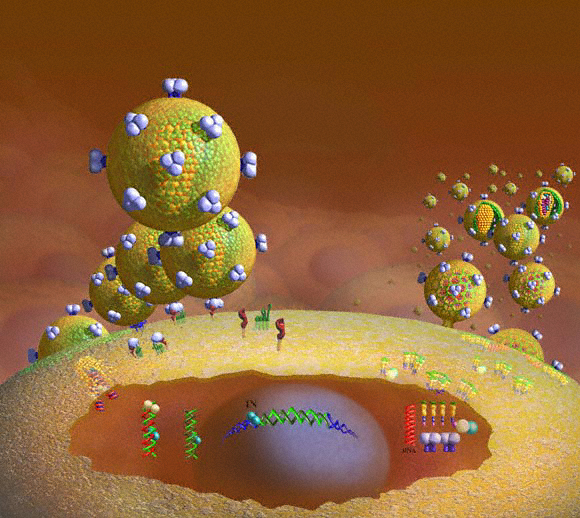
The ability of HIV to bond to different coreceptors for cell entry is known as tropism. After attaching to CD4, HIV must also bind to one of two additional coreceptors. The predominant coreceptor is CCR5, especially early in the course of infection; alternately HIV may be able to bind to CXCR4, either instead of or in addition to CCR5. Viral and host cell factors determine viral tropism and the dynamics of viral attachment prior to cell entry. Tropism has critical implications for HIV care. This article explains tropism and explores how it may influence decisions regarding the use of CCR5 antagonists for disease management.

Format:   >HTML

Jason Bratcher, MD, MBA and Joel Palefsky, MD

Anogenital Human Papillomavirus Coinfection and Associated Neoplasia in HIV-positive Men and Women

The incidence of anal intraepithelial neoplasia (AIN) and anal cancer, caused by human papillomavirus (HPV), is much higher in HIV-positive women and HIV-positive men who have sex with men (MSM) than in the general population, and highly active antiretroviral therapy (HAART) for HIV disease has had little or no impact on this trend. There is a growing need for definitive guidelines to assess for AIN in HIV-positive individuals, and with better treatment options available, it is even more crucial to identify these patients at an earlier stage. New York is the first state to institute recommendations for anal cytology screening in HIV-positive patients.

Format:   >HTML | >PDF | >CME | >(7)Comments

Todd T. Brown, MD, PhD

Selected Endocrine Topics in HIV: Osteoporosis and Adrenal Insufficiency

The care of HIV-infected patients has become increasingly complex. Endocrine problems, such as osteoporosis and AI, have been frequently reported in the HAART era. Additional considerations may be required regarding the etiologies, diagnosis, and treatment compared with the general population. Further research is required to understand the intricacies of these problems in HIV-infected patients in order to provide optimal care.

Format:   >HTML | >PDF | >CME

Saurabh Mehandru, MD

The Gastrointestinal Tract in HIV-1 Infection: Questions, Answers, and More Questions!

The GI tract is targeted during all stages of HIV disease, and this is especially so during acute and early HIV infection. CD4 cells are preferentially lost from the GI tract within weeks of HIV infection. Despite long-term antiretroviral therapy, CD4+T-cell reconstitution remains deficient in the GI tract in spite of the reconstitution seen in the peripheral blood.

Format:   >HTML | >PDF | >CME

More PRN News Capsules...

Provider Resources

CME

Members Only

PRN is pleased to offer this new CME opportunity designed for physicians, nurse practitioners and physician assistants caring for patients with or at risk for HIV disease and its many complications. Based on content from The PRN Notebook, credit for each course will be available for a limited period of time noted on each activity.

View CME

Full PRN membership is now open to clinicians nationwide.

  • Monthly Meeting Announcements and Pre-registration
  • CME for Meeting Attendees
  • Special Events

CLICK HERE TO JOIN OR RETURN

This website is partially funded by educational grants from: