

PROGRESSION
A Closer Look at HIV and Antibody-Based Interventions for Prevention, Treatment, and Cure
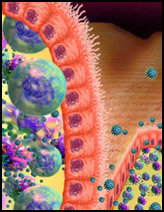
Multi-scale imaging reveals new insights into the interactions between HIV and host immune responses that allow the virus to persist during antiviral treatment. The new technology being utilized will be described, as will the emerging insights and potential new approaches for intervention in the clinic. Don’t miss this visually dazzling presentation by Tom Hope that will help you understand infection and interventions from a nanoscopic perspective.
HIV Elite Controllers and What We’ve Learned from Them
Soon after HIV was discovered, clinicians and researchers became fascinated by a small group of people with HIV who did not progress even though they were not taking antiretroviral therapy (ART). Initially termed long-term non-progressors, some of these individuals maintain undetectable HIV RNA without taking ART and are called HIV elite controllers. In this talk, Dr. Gandhi will talk about how best to diagnose elite controllers in the era of early ART initiation and summarize the factors associated with HIV control. He will talk about the price of this control – namely immune activation and inflammation – in some elite controllers and why ART may be warranted.
HIV Post-Treatment Control: Insights On Remission from a Unique European Cohort
Antiretroviral treatment cannot eliminate HIV reservoir cells that cause viral rebound if treatment is interrupted, requiring lifelong treatment. However, some people who were diagnosed and initiated ART in the earliest stages of primary HIV infection have demonstrated the ability to stably control viremia after treatment interruption, achieving a status of durable HIV remission. Dr. Sáez-Cirión from the Institut Pasteur in Paris, France, has been studying a cohort of these rare post-treatment controllers for years in the VISCONTI Study, finding that early treatment may favor the maturation of the memory response against the virus, allowing a more efficient secondary response after treatment interruption. A better understanding of the mechanisms of post-treatment control may lead to the development of new immunotherapies to achieve HIV remission.
Towards an HIV Cure: Understanding HIV Persistence and Therapeutic Approaches
HIV cure has been limited to only a few cases over the past couple decades, starting with the Berlin Patient, but what is needed is a safer and scalable cure aimed at far broader populations of people living with HIV. This year, the International AIDS Society focused on HIV cure research from around the world at IAS 2023. We are fortunate to have Dr. Sharon Lewin, the current President of the IAS, who presided over IAS 2023, speak on this critical area of research so that one day we may hopefully be able to transform HIV from a manageable to a curable disease.
PET Imaging Provides Novel Insights Into HIV/SIV and SARS-CoV-2 Disease Progression
We have seen the dazzling and thought-provoking images from Tom Hope in the past and in this new presentation we will see further advances from macro- to micro-imaging that reveal progression of SIV and SARS-CoV-2 infection in non-human primate models. His recent research focuses on HIV-related mucosal immunology, HIV transmission and prevention science, as well as infection-related disease progression for COVID-19 and long COVID.
Progress Towards Developing an Effective HIV Cure
The chronic management of HIV disease has advanced so far already, do even need a cure? Join us for this exciting presentation by Steve Deeks addressing the needs for a broadly scalable cure for HIV, as well as research approaches that may help us achieve this ever-elusive yet long-sought goal.
The World Within: The Microbiome and Mucosal Immunity in HIV Medicine
We hear more and more about the microbiome these days, but what impact does the microbiome have in people with or at risk for HIV infection? We know the gut lymphoid system is rapidly and permanently impaired by HIV, and chronic use of antiretroviral drugs for HIV and antibiotic prophylaxis against opportunistic infections can affect the gut, but need we be concerned about the microbiome? This fascinating program will help you understand what is presently known about the interplay of the bacterial microbiome and mucosal immunity, the resulting effects on HIV susceptibility and HIV-associated chronic inflammation, and the latest efforts to leverage the microbiome to prevent HIV transmission and improve health for those living with HIV.
Immune Activation in the Pathogenesis of HIV Infection: Causes and Consequences
How do we explain where HIV comes from? Or how long it takes from exposure for infection to begin, and how do we detect it? What is the virus doing during the brief acute stages, and during lifelong chronic HIV infection? In this program Netanya Utay answers these questions related to HIV pathogenesis, its impact on the immune system during acute infection and the consequences of chronic immune activation, despite life-saving antiretroviral therapy.
Current Approaches Toward the Cure of HIV Disease
When your patients ask you what progress is being made in efforts to cure HIV disease, what can you say? Currently, there are many different approaches to eliminating HIV from people living with it, but which ones show promise for a scalable cure in the real world? And is it time to give up on a magic bullet, and instead look to combinations of cure modalities? For up to date answers to all these questions, don’t miss this important program by Danny Douek.
HIV Controllers: Implications for HIV Cure/Remission
Why is natural immunity to HIV ineffective in the vast majority of out patients? And yet, how is it that a small minority of our treatment-naïve patients can maintain low or undetectable levels of HIV without antiretroviral therapy? What secrets might these HIV-controllers reveal that may contribute to vaccine functional cure in our patients who are susceptible to, and cannot control HIV spontaneously? Don’t miss this exciting and thought-provoking lecture by Bruce Walker, who has led the way in research characterizing HIV elite controllers, what makes them so special, and why this is important in strategies to cure HIV disease.
The Good, the Bad and the Ugly of Inflammation in HIV Infection
Inflammation plays an important role at every stage for HIV infection, from the acute stages of primary infection until death. But even though antiretroviral therapy has radically slowed progression of this disease to near-normal life expectancy, we see immune activation and inflammation in various manifestations, contributing to HIV disease progression, and increasing the risks of morbid non-AIDS events and mortality. Join us for this comprehensive and thought-provoking review of the many changing faces of inflammation in HIV disease.
Virologic and Immunologic Monitoring in HIV-positive Adults: Updated New York State Guidelines
The standard of care for laboratory monitoring of HIV disease has changed, placing the emphasis on measurement of virologic control at variable intervals based on adherence. Routine quarterly measurement of CD4 cells has been replaced with more rational and cost effective strategies. For all the details of the updated guidelines on monitoring virologic and immunologic trends in HIV management, from the AIDS Institute of the New York State Department of Health, please see this video of Sam Merrick’s recent presentation at PRN.
Diagnosis and Treatment of Acute HIV: A Stitch in Time?
Over the years at PRN, we have revisited the pros and cons of early treatment of HIV, even during the acute stage of primary HIV infection. And now, with safer long-term treatment alternatives, the tide is turning toward early treatment as a potential means of preserving immune function, decreasing mutant strains in reservoirs, decreasing risk of further transmission, and improving the chance for a future cure. In this presentation, Raj Gandhi provides an overview of the signs and symptoms of acute HIV, how to diagnose it and initiate treatment, evidence-based research demonstrating the benefits of early treatment, and the potential for functional cure.
Long-term Remission of HIV after Interruption of Very Early ART in Adults
Rarely, some individuals are able to control HIV without medication, while the overwhelming majority of people with HIV infection will progress to AIDS and death without lifelong antiretroviral therapy. But for this majority who are unlikely to control HIV spontaneously, is it possible to induce HIV control and prevent progression of disease without medication? The VISCONTI Study implies that this may be so. This important study in France has shown that very early diagnosis and initiation of combination antiretroviral therapy eventually led to virologic control after treatment interruption in a higher-than-expected proportion of study participants. Join us for Dr. Sáez-Cirión’s discussion of this important study and its contribution to research for a cure.
Adding Immune Therapies to ART: Can We Achieve a Functional Cure?
To date, the HIV epidemic continues to grow, despite the use of antiretroviral therapy alone. And inflammation in HIV-infected individuals drives both disease progression and possibly also viral persistence, even while on antiretroviral therapy. Immune therapies that Inhibit inflammation may represent one route toward a “functional cure” of HIV disease.
HIV-1 Pathogenesis and the GI Tract: The Effects of Colorectal Immune Deficiency and Reconstitution
The gastrointestinal immune system plays a key role in the pathogenesis of HIV infection. This lecture by Saurabh Mehandru will help you appreciate the
catastrophic impact of acute HIV infection on the GI immune system, as well as the effect of prolonged antiretroviral therapy on GI immune reconstitution and its potential clinical implications.
Strategies (And New Agents) For Antiretroviral Therapy Of HIV-1 Disease
The initiation and management of antiretroviral therapy is constantly improving, and periodic review of new data as well as changing treatment guidelines are imperative. In this lecture, Trip Gulick discusses important clinical studies that have led to changes in current guidelines as well as ongoing studies that may expand treatment options in the future.
Hypogonadism in Older HIV-infected Men: Current Concepts and Controversies
Hypogonadism in HIV-positve men of all ages is a common problem, and the long-term management of hypogonadism is of special concern as men age. Todd Brown returns to PRN to speak on this important endocrine abnormality, and if you have male patients nearing or over the age of 50, you will find this especially interesting and useful.
Update On Solid Organ Transplantation In People With HIV Infection
A true leader in access to liver and kidney transplants for HIV-infected patients with end-stage liver and kidney disease, Michele Roland returns to PRN to discuss all that has been learned since she first spoke on this subject at PRN in 2000.
The Gastrointestinal Tract in HIV-1 Infection: Questions, Answers, and More Questions!
The GI tract is targeted during all stages of HIV disease, and this is especially so during acute and early HIV infection. CD4 cells are preferentially lost from the GI tract within weeks of HIV infection. Despite long-term antiretroviral therapy, CD4+T-cell reconstitution remains deficient in the GI tract in spite of the reconstitution seen in the peripheral blood.
Acute HIV Infection: Recent Issues in Treatment, Progression, and Superinfection
Long-term outcome studies of persons enrolled early in the course of HIV infection continue to yield important data regarding transmission dynamics, disease progression, efficacy of treatment, and incidence and consequence of superinfection. The Options Project at San Francisco General Hospital is such a study, and Dr. Frederick Hecht, a co-director of the program, and his colleagues continue to make headway in exploring various pathogenesis- and treatment-related issues affecting newly infected patients. In this article, Dr. Hecht returned to PRN to provide members with an update on treatment and treatment interruptions in early HIV infection, the role of T-cell activation in acute HIV infection, and the effect of sequential superinfection with variants of HIV.
Tracing the Origin of the AIDS Pandemic
For those lucky enough to be in attendance, the keynote lecture delivered at the 6th Conference on Retroviruses and Opportunistic Infections (CROI) was nothing short of a jaw-dropping experience. Dr. Beatrice Hahn of the University of Alabama at Birmingham presented the first concrete evidence of the primate origin of HIV-1, the much more prevalent of the HIV types responsible for the AIDS pandemic. The official report of her team’s findings, published in a February 1999 issue of Science, was a no less captivating example of seminal scientific research (Gao, 1999). The following article summarizes Dr. Hahn's presentation to the Physicians' research network on this fascinating topic.
Making Sense of HIV Pathogenesis
In the acute phase of infection, there is massive loss of memory CD4+ cells. And in the chronic phase of infection, there is significant immune activation. In this presentation to The Physicians' Research Network, Dr Douek argues that we have to rethink our idea of HIV pathogenesis. We’ve always thought of it as a slow depletion from the acute phase through the chronic phase, over a period of approximately ten years. However, we now know that HIV is truly a rapid disease. Within three weeks after infection, you’ve lost most of the CD4+ cells in your body.
Women and HIV: An Overview
The care of HIV-infected women is an evolving process. Research continues to define the ways in which HIV-infected men and women are similar and different, findings that will continue to shape—and reshape—the standards of care that apply to both sexes. In her presentation to the Physicians’ Research Network, Dr. Judith Aberg stressed that efforts are needed to expand prevention efforts and to increase availability of testing to at-risk women. “We still have too many women presenting late in the course of infection,” she said. “The research showing that women do not progress faster than men is important. Now we need to start making sure that women aren’t allowed to progress because of limited access to testing and services. Fear, isolation, and lack of information remain key issues to address.”
Novel Viral Markers Predict HIV Disease Progression
Over the past 20-plus years of the AIDS epidemic, clinicians have come to appreciate that while there are relatively predictable markers of HIV disease progression—viral load and CD4+ cell counts being the most widely utilized—the course of HIV infection is extremely variable among individuals. Building upon these observations, researchers have been determined to unlock the mysteries of the elusive host, immunologic and virologic factors—and biological markers—associated with HIV disease progression.
HIV Long-Term Nonprogression: Insights into Pathogenesis and Viral Control
After an individual in infected with the virus, progression to AIDS—provided that antiretroviral therapy is not used—typically occurs within ten years. However, for a small group of individuals, HIV infection runs an unusually benign course. These patients, dubbed long-term nonprogressors (LTNPs), maintain very low viral loads and stable CD4+ cell counts for many years—indefinitely in some cases—without the assistance of antiretroviral therapy. Understanding the factors that contribute to long-term nonprogression will hopefully yield greater insights into the pathogenesis of HIV infection and will be crucial for vaccine design and the development of therapeutic modalities.
Mechanisms of T-Cell Depletion and Regeneration in HIV Disease
More than 20 years since the beginning of the AIDS epidemic, there is still no clear-cut explanation for HIV's most basic and insidious effect in the human body: the gradual depletion of CD4+ T-lymphocytes in the absence of antiretroviral treatment. At the same time, there is little consensus regarding the mechanism(s) by which CD4+ cell counts improve once therapy is commenced. On some level, the fact that CD4+ cell counts do improve-both quantitatively and qualitatively-with antiretroviral therapy should be enough to satisfy the hearts and minds of HIV-treating clinicians. But there is much to be gained medicinally with the continued exploration of these fundamental questions. For example, antiretroviral therapy plays a critical role in halting the accelerated destruction of CD4+ cells, perhaps the most widely accepted mechanism of HIV-associated CD4+ cell depletion. But there is also at least one other mechanism to ponder-the impaired production of new CD4+ cells as a result of HIV infection-that may have significant bearing on the evaluation and potential use of various immune-based therapies in the clinical management of HIV-positive patients.
Update on IL-2: Where It's Been and Where It's Going
Perhaps no other drug in the history of HIV/AIDS treatment research has been more extensively studied than recombinant interleukin-2 (IL-2). It has been evaluated in numerous proof-of-concept and phase II clinical trials—both alone and in combination with antiretrovirals or with other immune-based therapies—involving a broad spectrum of patients, including those in the acute, chronic, and late stages of HIV disease. Ironically, however, it still lacks a licensed therapeutic indication in HIV. This may change sometime during the next few years. Massive phase III clinical trials are now under way to address fundamental questions regarding the clinical utility of IL-2 treatment. These results—along with other data from pivotal IL-2 clinical trials—will be reviewed by the U.S. Food and Drug Administration and may help carve out a niche for the drug in the standard-of-care for HIV-positive people.
The Road to Eradication: Is HAART Hard Enough?
At the ground-breaking 1996 International AIDS Conference, Markowitz and Ho, postulated 1.5--3 years of “maximally suppressive” antiretroviral therapy might eradicate HIV infection. Since then, research has shown that HAART may not completely shut down HIV replication, and that infection may persist in reservoirs. “But this does not mean that we should abandon concepts of eradication or remission,” stated Dr Markowitz at a meeting of PRN in NYC, “the shortcomings that we see today, especially the emergence of drug resistance, might be less of a concern if we can maximize the benefits of therapies that are now available, as well as those in development.”
